Showing posts with label Chickens. Show all posts

Jun 19, 2017

Baby Chick Essentials

What you need for raising baby chickens

We got some more chicks! If you get the newsletter, you've already received a sneak peek of the chicks. Sign up so you don't miss any more happenings!

We feel so much more confident about raising chicks now that we've done it a couple of times before. We started with Rhode Island Reds, then Ameraucanas, and now we have a mixed flock: 3 Leghorns and 5 Golden Comets.


We've had some great success with raising our chicks (and have yet to lose a chick- knock on wood!). If you are looking to get started here are the essentials for raising baby chicks. The links below for items are affiliate links, which means if you click on the link and make a purchase I may make a commission, but the price to you is unchanged.

Coop/Brooder

Your chicks need somewhere to live. Technically that place is a brooder while it is heated, and a coop if it is not. For us, a house is a house no matter what you call it, and, regardless of what you call it, their first one does not need to be fancy. For our first set of chickens we used a large cardboard box with some hardware cloth over it. Know what? It worked out perfectly. Your chicks are only going to be in there a few months so it's plenty.

Now for our second batch of chicks we knew we'd need something a little more robust not only because our dogs were beginning to understand what chickens were, but we wanted something we could use when it was time to introduce the two flocks. So we knew this coop would need to withstand chickens fighting and it would need to have screens so they could see one another.

We built what we affectionately call our Mini Coop. It's plenty large to hold baby chicks. It held our 6 juvenile Ameraucanas with no problems. Whether you use a box or a coop, they'll need a protected home. Read how we made their big coop.


Water

There are nearly an infinite number of ways that you can provide water for your chicks. At a young age I recommend a waterer or poultry drinker that has a trough. I haven't used a nipple waterer, but I imagine it might be hard for chicks to figure out and I've heard algae can grow up in them. It's far easier to take apart and wash a trough.

When ours are babies we use this one (ours is plastic, and I wish I had known they make it in metal).  I love that we can use regular mason jars for them. The larger the mason jar you use, the less often you have to refill it. However I'd advise against getting one too large and you have to be careful where it is placed. Chickens like to scratch at the ground and they almost always kick up litter into the water so it will need to be cleaned regularly.

When they get larger you should get this waterer because it uses a float to prevent water from leaking out. You can take the top off and refill it with a hose rather than waiting until it is empty. It also doesn't use nipples which can get stuck with algae. I am so happy we got this one, it is a huge time saver for us and we never have to worry about running out of water or it spilling everywhere.


Food

Your chicks will need to eat something. It is up to you if you want to use organic chick feed or medicated/conventional chick feed. We've always elected to use the medicated feed because we didn't want them to get coccidiosis, an intestinal disease, and we weren't raising them to be organic egg layers or organic meat. If you are raising them to be organic you will obviously want to go with the non-medicated feed.

We feed them the medicated started the first month or so, usually just a bag or two, but our current 8 seem to be eating up a storm (or spilling it everywhere), so we may need some more. After the first month we convert to non medicated starter or starter/grower. This has a higher protein content and lower calcium content than you'll want once they start laying. At that age, about 5 months or so, you'll want to switch to layer feed. I also swap to pellets so its easier to clean up the messes. I am so thankful they named the types of feed so it makes sense: starter to start, grower to get them big, and layer for while they are laying!

While they are eating chick feed they do not need supplemental calcium or grit.

Heat

Baby chicks don't have all their feathers in nor do ours have their Momma to burrow under. So you have to make sure they stay warm enough. Recommendations I've heard are to keep them at about 95 degrees for the first week and then lower it by 5 degrees every week. So week two keep them at about 90 degrees, week three would be 85.

Keep it going until they have all their feathers or you have caught up to ambient temperature. Now pay attention to your birds. If they are all huddled together it means they are too cold, if they are spread out and "panting" they are too hot. Don't force them to be at 90 degrees simply because that's what the recommendation is. 


How do you provide heat?

In the past we've just used a small utility light with a standard incandescent bulb. You'll want to avoid an LED light, because while it will shine, it will not provide any heat! This is the one time you should get a standard bulb over the environmentally friendly option. Just the regular light bulb has worked well for us, but we live in Florida and chick raising is in the spring and summer when temperatures are getting warmer.

For these chicks we purchased a heat bulb. The red is supposed to help them with their circadian rhythm and provides heat. We noticed that they were getting too hot with the lamp and the air, so we turn the light off in the day and just keep it on at night when it gets cooler and eventually we switched back to a regular incandescent light. Again, watch your chicks, they'll tell you what they need.

How do you measure the heat?

A thermometer! It doesn't matter how fancy it is. It can be an old mercury thermometer or a fancy laser thermometer. We've used both.


Litter

You'll need to put something in the bottom of the coop. It helps absorb the poop and chickens love to scratch at things. We've used old leaves, wood chips, and straw. Pretty much the only thing I've heard advised against is cedar. The fumes and scent off of the cedar chips made someone's chicks ill. Remember the chicks will be in an enclosed space with this so limit items with a strong odor.

We change ours about once week. The reason for this is two fold. First, it's a small space with a lot of birds. The number one thing chickens were put on earth to do is poop. So it can start to smell if the poop-to-litter ratio gets off. Second, they like to scratch and some falls out the holes so it needs a topping off.

Roost

Your little chicks will start to sleep on a roost at a young age. A roost is a raised area where chickens sleep. It generally is a a bar or rod shaped item raised off the ground for the chickens to sleep on. Depending on when you move them into a permanent coop you might be able to get away from this, but they chicks experiment jumping up on the roost and trying to balance up there from a young age. Our first roost was a piece of bamboo strung up between both sides of the box. It might have been a little narrow for our chicks, but they got the hang of it. Our outdoor coop has a 2x2 piece of wood that the chickens all jump up on to sleep.


That's it! It's very easy to raise baby chicks. Now that you have some babies, you'd better start working on their coop. Or maybe you want to learn from some of the set backs we experienced such as them molting, eating their eggs or getting chicken pox (yes, that's a thing!).


Don't forget to sign up for the weekly newsletter to keep up to date on all of our chicken raising, homesteading and zero waste antics.

Thanks for sharing on Pinterest!
Shared on Animal Tales

May 5, 2017

Heartbroken


We had a massacre. All of our chickens were killed. Hubby woke up on Tuesday morning and found that something had gone into the coop and dragged each of our Rhode Island Reds out and killed them. We were devastated. We never really considered the chickens as our pets; we never named them and didn't really hold them that much, but they were still our animals and we were saddened by the loss.

We weren't sure what got into the coop or when it happened. We had a class that got out late Monday night so when we came back home we basically called the dogs in and went to bed. The dogs were a little slow to come into the house, but nothing too concerning. So now that we knew something got the chickens we were wondering if the dogs had got into the coop while we were at class or if something had snuck in during the middle of the night after the dogs had come inside.

A neighbor had seen a raccoon at their house, and raccoons are tricky animals that can break into coops. Monday night I happened to notice a small spot in the coop where the hardware cloth was coming apart, but it wasn't nearly large enough for one of the dogs to get in. Hubby said when he found them the next morning it might have been large enough for Maggie, the puppy, to fit, but not really Lexy. We just couldn't have pictured the dog going in and dragging them out.

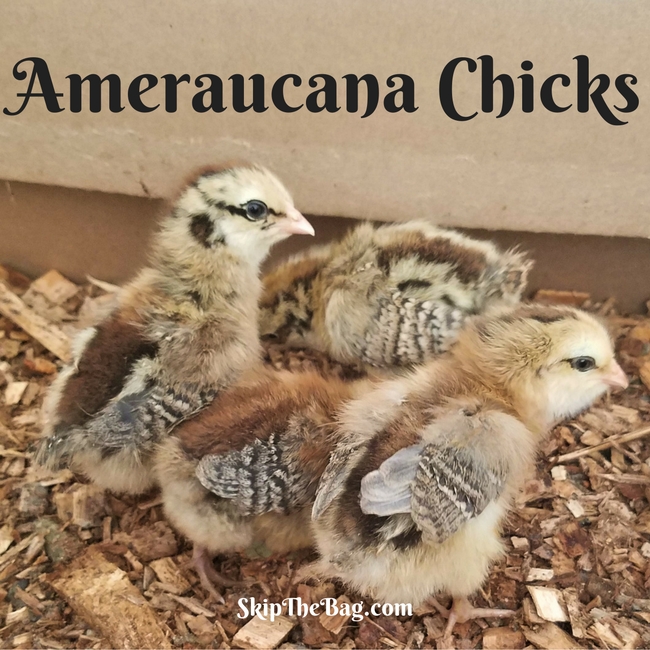
The ameraucana chicks were spared. They were in their small coop. We had started the process of introducing the two flocks. We wanted the Rhodies to start getting used to the ameraucanas without being able to injure them.

Hubby patched up the coop. He reattached the hardware cloth to the coop. There were staples about every two inches. He also made changes to the coop to allow the ameraucanas free to roam. We had to lower the feeder and waterer so they could reach. We talked about how the dogs had been sullen and avoided Hubby all day and then decided to get tacos from a local taco truck (it was Tuesday after all).

That night when we home the dogs were really energized. Lexy was panting so hard she could hardly climb up the stairs. I was afraid that the dogs might be chasing whatever it was that broke into the coop. Well we walked outside and found they had broke into the coop again and this time killed the ameraucana chicks. This time there was no denying that it was the dogs that broke into the coop. Unfortunately it wasn't the first time they'd killed chickens either.

They pulled at the corner of the door and pulled and pulled until it created a hole large enough for them to get in the coop. So it looks like we will be reinforcing the coop before getting any more chickens. Around the rest of the coop we've buried the hardware cloth underground so it would be much harder for predators to get into the coop. The door is a weak spot because we can't bury it underground. We are considering screwing it between two pieces of wood so they can't open it.

We know that it is in the dog's nature to want to get chickens and that it is our job to protect the chickens from predators. So we are sad about the incident, but will resolve to do better.

Have you ever had a predator break into your coop? How did you secure the coop?


How we lost our chickens.
Shared on Homesteader Hop,

May 1, 2017

Ameraucana Chickens

SkipTheBag uses affiliate links. If you click on the links below and make a purchase I may receive a commission, but the price to you remains the same (disclosure).
Ameraucana Chickens
We've added to our flock! With the loss of two of our chickens, we were itching to get some more. We have Rhode Island Reds which produce brown eggs, although one of ours lay eggs which are more pink than brown. However this time around we wanted to get a chicken that lays another color of egg.

First let me say that the shell of the egg is a different color, not the yolk or egg white. I told someone that our chicks would lay blue eggs and she did not think that sounded appealing at all. However, when I explained that I misspoke and it was just the shells she was far more interested. 

There are a couple of different types of chickens which will produce blue or green eggs namely Araucanas, Easter Eggers and Ameraucanas. Where we live the Ameraucanas are far easier to obtain, but still not very common. Stores were just starting to get some chicks in and our favorite feed store had just sold out of their Ameraucanas. The following week we called around to a couple of stores to see if anyone had any Ameraucanas. Several did not have any, but one had four left. Hubby rushed over to the store and got those four. 


The guy at the store said since they were the last four they were a little bit older. Typically chicks are only a day or two old so they may not have eaten yet. In fact the box says to give them water but no food for 5 hours. Our chicks were already eating, drinking and had a few feathers. 

These four are also very feisty. They immediately run away and try to hide in the corner when we put our hands in. They run away even if we aren't trying to pick them up but are sticking our hands in there to make sure they have food and water. Once we have cornered them and picked them up about half the time they will squawk loudly and the other half of the time they tolerate it. This is very different from our Rhode Island Reds which didn't seem to mind people and would generally just stay put and not run away. 


I wasn't sure if all Ameraucanas were this feisty or if, by the fact these were the last four left at the store, they were the quick and skittish ones that hadn't been caught yet. Many sites say that Ameraucanas are docile, but several have commented that they are very skittish even when hand raised. So it looks like they we might have got the spunky ones of the bunch. 

We didn't do a whole lot of research about Ameraucanas before we got them. In fact, it was only a day or two before getting them that I learned it is spelled Ameraucanas. I had assumed it was spelled like it sounds: Americana. But alas their names aren't quite that patriotic. Instead they give a nod to the Araucana chickens, from which they came. However they were crossbred here in the United States so maybe their names are a little patriotic. 


Ameraucana chickens lay blue to green eggs which we are excited for. They tend to take a little longer to start laying about 22 to 26 weeks, but some as late as 30 weeks whereas our Rhode Island Reds started just about 20 or 21 weeks. Ameraucanas also don't lay quite as much as about 5 eggs per week versus the 6 eggs per week a Rhode Island Red will get. 

One thing we now have to figure out is how to introduce the two flocks. Heard of the term "pecking order"? Well it came from chickens trying to exert their dominance. We were warned during our chicken class that you should introduce new birds to the flock slowly to get them used to one another and prevent the older chickens from bullying (and even killing) the new ones. 

Hubby is making a coop to go inside our current coop for the babies to go into (once they have enough feathers to go outside). That way they can get used to seeing one another, but the chicks will be protected from beaks and talons. Hopefully the fact that the babies are so feisty and the older ones have been so docile it will be a smooth transition. 

Have any tips for raising Ameraucanas or introducing flocks to one another?


Don't forget to check this baby chick essentials post to make sure you have everything you need for your new flock!

Shared on You're The Star

Apr 10, 2017

How To Turn 5 Gallon Buckets Into Nesting Boxes


Hubby and I had to reinforce our chicken coop because the puppies were jumping up against it. Our dogs and chickens do not mix. Since we had cut holes in the hardware cloth there a weak spot had been created. So we took to bracing and reinforcing that area of the coop and I figured this was a good time to show you how we turned 5 gallon buckets into nesting boxes.

When we first got the chicks and built the coop we weren't really sure what to do for nesting boxes. We had been using 5 gallon buckets as a shelter for them to huddle up and keep warm when we first brought them outside. So it would be a natural fit to turn them into nesting boxes, unfortunately the chicks got in the habit of sleeping in them, so for many weeks we didn't have anything in there.

When we installed the buckets back in there the chickens didn't want anything to do with them, but they figured it out because they started laying their eggs in the buckets pretty quickly.  Apparently chickens naturally want to lay their eggs in an enclosed place off the ground. People build and use all sorts of nesting boxes, but for us buckets were an easy option.

Chicken coop with nesting boxes
5 Gallon Buckets Used As Nesting Boxes
 I use affiliate links. If you click on an Amazon link, I may receive a commission
which is used to help fund this blog. The price to you remains unchanged. 

We knew we wanted the nesting boxes close to the door so that we wouldn't have to traipse through chicken poo every day to get the eggs. So we first decided to hang them from the front of the coop, near the door. That worked well, but we still had to go inside the coop and risk chickens getting out or stepping in chicken poop.

You can see we made a wooden brace for the front of the nesting boxes. This provides a small perch for the birds to get in and out of the boxes and also provides a front stop for the eggs to prevent them from rolling out of the bucket. Since we had some problems with the chickens eating their own eggs, we have raised this brace so the buckets are at a slight upward angle, making the eggs roll to the back of the bucket. This, and the presence of ceramic eggs, help deter them from wanting to peck at the eggs. We hadn't tilted the buckets back yet and as you can tell they eggs are at the front just begging to be pecked. Fortunately the ones you see in the bucket are ceramic!

Then one day when Hubby was wandering around a hardware store he found female adapters, a plug, a piece of PVC pipe and a coupling adapter. Using 4 inch pipe makes it large enough to easily fit a hand and egg through the hole. You could make it with 3 inch pipe, but it is far easier to reach in and pull out an egg if it is 4 inches.

How To Turn A 5 Gallon Bucket Into A Nesting Box
The order, coupling adapter on the inside, PVC pipe
through the bucket, female adapter and lid on the outside.

Hubby is demonstrating how he put them together. The large object on the left on top is the coupling adapter. He cut it in half to make it more narrow. It sits on the inside of the bucket and keeps the whole piece from just falling out of the bucket. The long piece on the bottom is the PVC pipe, it needs to be cut down to an appropriate size, about 5 inches: 2 inches for the coupling adapter, 2 inches for the female adapter and a little space for the bucket. To cut the PVC pipe he says a hack saw would work, but he used his band saw.


Then on the outside of the bucket is where the female adapter and lid would go. The lid keeps the bucket closed from predators and dogs. He cut holes in the bucket with a reciprocating saw or a hole saw and we used tin snips to cut holes in the hardware cloth. Unfortunately it created a weak spot so when the dogs would get get excited and jump against it it created a tear through the hardware cloth.

5 gallon bucket with PVC clean out adaptor.
Close up of bucket with pipe female adapter and lid (excuse the dirt, we're a farm!)

We ended up taking down the entire section of hardware cloth and adding braces. We braced along the bottom of the buckets and around the holes.  Since the pups created a tear in the hardware cloth we also had to replace that. We had enough to cover it, but not all in one piece. So you can see there is some overlap over the second bucket, which will hopefully make it even stronger.

5 gallon bucket as a nesting box for chickens.
Finished product. Buckets are braced!

Now that we've done this the coop is so much stronger in this area, and it is still easy to get the eggs out. Pop on over and check out how we made our coop.


What do you use for your nesting boxes?


Pin for later:
How To Turn A 5 Gallon Bucket Into A Nesting Box
Shared on Homestead Hop

Jan 9, 2017

Dogs And Chickens


Hubby has been working with our dogs, Lexy and Maggie, to get them more well behaved with the chickens. When we first got the chickens Lexy would just run laps around the coop, thankfully that has stopped, but there have been instances where she is barks at the chickens non-stop while we are gone. When we got Maggie, she seemed a little more indifferent to the chickens, but I've witnessed her jumping up against the coop too.

He started by letting the dogs outside while the chickens were loose and they got more and more comfortable. It got to the point that Hubby could be outside working in the garden or yard and the dogs and chickens would be out there together with no issue. I would hear stories about how Lexy would just be sitting there surrounded by the chickens and not caring.

Saturday we had our first (and likely only) bit of freezing weather. It never really got out of the 30s. Hubby went outside in the morning to let the chickens out because they were all huddled together in a small patch of sun, so we figured we'd let them out to get more sunlight and warmth. Since it was morning we also let the dogs out. We watched them from the window and there were no issues, but it was so cold the pups didn't stay out long.

The dogs spent most of the day with us, but they would go back and forth some. We would spend time looking out the window watching the chickens or the dogs, or both. Things seemed to be going just fine. That afternoon though we got settled in and ran errands and forgot the chickens were out. It was about dinner time and starting to get dark when I asked Hubby if he'd put the chickens up. He hadn't, but I figured they would all be lined up on their roost at this point.

When we went out there he found that the pups had just killed one of the chickens and were picking at it. :( It appears that when we put the dogs out that evening one of the dogs got the chicken and snapped it's neck. We didn't hear any commotion, so we don't think there was much of a chase or fight. We called the dogs "bad dogs" and they acted appropriately guilty and remorseful and Hubby buried the chicken.

So now we are a flock of 5. We know it's totally our fault: we forgot to put the chickens back in their coop, we let the dogs go outside unsupervised, and we know that it is their nature to want to catch the birds.

So let this serve as a reminder that even the best trained dogs (which ours aren't!) should have a watchful eye because sometimes instinct just takes over. We will likely wait a little bit before having them both out together, but either way they will be supervised!

Have you ever lost a chicken?

Pin for later:
Can dogs and chickens get along?


Shared on Homesteader HopWaste Less WednesdayPretty PintasticHome MattersAnimal Tales

Dec 16, 2016

Chickens Molting


I got home from a work conference to find that a couple of our chickens started turning ugly.

Just kidding! They had started to molt. Unlike when they got chicken pox, I knew that molting was a possibility, but I didn't really know what it would look like or what caused it. So I decided to do some reading to learn more. Amazingly I have 4 books that books that are about homesteading/urban farming, but mention chickens on the cover or are expressly about chicken raising.

So what did I learn about chickens molting? Not very much. The two books that are broader homesteading or gardening books do not mentioning molting at all. The two books about raising chickens each had about 2 paragraphs of information about molting. So that tells me that chickens molting is either not that important or not that interesting.

Well I find it both, so here goes: Molting is when the chickens lose their established feathers and start growing new ones. They tend to molt each year in the fall or winter, but sometimes they skip their first year. One of our chickens is full on molting, another one seems to be doing it, but either is a slower molter or has just started. The other 4 look completely normal so I'm guessing they will probably skip molting this year or maybe they'll just start later.

Some chickens lose their feathers slowly so you can barely notice, but others lose them quickly so they look a little scraggly. Unfortunately the later is the case with one of my girls. She just looks like she's going grey and skinny because the new feathers are coming in.

Can you stop them from molting? Nope. It's best to just let nature take it's course.

How can you support your chickens while they are molting? There isn't really anything that you can do other than ensure that they have proper nutrition including adequate protein. Some people increase their protein availability (by adding cheese or eggs, but there are risks to that), but others don't do anything.

SkipTheBag


What about eggs? Molting generally slows egg production, but it doesn't affect the quality of their eggs. Sadly, one of the books said that commercial eggeries (I think I made that word up, but, you know, commercial egg production plants) "harvest" chickens when they molt. We're obviously not going to do that. In fact, their egg production has seemed increased from the low we experienced while they were fighting off the chicken pox. Hooray!


Were you surprised when your chickens first molted?

Shared on Animal Tales

Nov 25, 2016

Chickens Eating Eggs


I have learned a lot of things about chickens, like that they can get avian pox. But one thing that surprised me was that chickens like to eat eggs. Chickens can eat eggs cooked or raw. It's not uncommon for them to peck at the eggs left in their nesting boxes. I would have thought it's some cannibalistic thing and they would avoid eating eggs, but I was wrong.

So we started keeping an eye out after learning eating their own eggs was a risk. But we had gone several months without an issue so it sort of fell to the back burner. One of the major suggestions that I read was to clean spills quickly so the chickens didn't get a taste for eggs and start viewing eggs as food. So the few times we'd have a couple of cracked eggs, we would wash up the buckets and make sure that the chickens didn't get too interested.

We generally put broken eggs and discarded egg shells in our compost pile. The hope is that it will make our compost more nutritious, but since it is open there is a risk that the chickens could wander over and find an eggshell. So we try to break up egg shells before putting them in the compost pile.

This site uses affiliate links (disclosures). If you click on product links and make 
a purchase I may receive a commission which is used to help fund this blog. 
The price to you remains unchanged. 


Since the chickens need calcium (although most of it is provided in their feed), we also tried to feed the chickens their old shells. Recycling in it's finest. We made sure to dry out the shells and crush them up so the 'calcium treats' we were giving them didn't look or smell anything like the fresh eggs they were producing. Fortunately our chickens eggs haven't seemed to need any additional calcium since the majority of their diet comes from layer feed. It was a pain to keep the egg shells clean and dry them so we've stopped supplementing the chickens and diverted most of the shells to the compost pile.

Chickens eating eggs may be a sign of nutritional deficiencies. They may be lacking calcium or protein. However make sure that you are feeding them good feed appropriate for their stage in life (chick vs layer) and that they have enough calcium. Don't forget grit too. Providing them commercial feed this is less of an issue than if your chickens are free range and at the mercy of your yard. However it chicken pecking at their eggs may mean your chickens are just jerks, so don't freak out.

We thought we were doing the right things, but none of that seemed to matter as last week we lost 2-3 eggs to the chickens.

So what did we do to combat it? We bought ceramic eggs and placed them at the front of their nesting boxes. The way the boxes are set up they can only stick their heads in a little bit. The eggs help as it will teach them that eggs in the bucket are hard and not for pecking. It has the added bonus of they will lay in front of these eggs, so they can't physically reach the real eggs from outside of the bucket.

Nesting Boxes With Ceramic Eggs
That helped for a while and did teach them that not to get at the eggs. However when we upgraded our coop and redid the nesting boxes we made sure that the buckets had a slight slope back. That helps prevent the chickens from standing outside the nesting box and pecking at the egg.

What have you done to prevent your chickens from eating their eggs?


Pin for later:

Shared on Homesteader HopWaste Less Wednesday

Nov 18, 2016

Our Chickens Have Pox!


It's true, chickens can get pox. While not technically chicken pox, it is a related virus called avian pox. Our chickens started having spots on their comb and waddles. I searched black spots on chicken comb and got some options.

1. Mites. 


The mites show upon the comb and on the body of the chicken itself. The black spots of mites look like tiny pin pricks of black on the comb. Our spots were bigger than that so I was able to quickly eliminate that as the culprit. Thank goodness cause I'm sure they are a pain to get rid of!

2. Chicken fights.


The next possibility I read about was that it could be due to the girls figuring out their pecking order and attacking one another. I hadn't really see our girls be aggressive toward one another, and I saw it on several of them. None of the spots really looked like they were bleeding or scabs so I doubted it was this.

3. Avian Pox. 


This was the third thing mentioned that it could be. I immediately googled a picture and sure enough it's what my girls have.

I use affiliate links (disclosure). If you click on an Amazon link 
and make a purchase, I may receive a commission which is used to 
help fund this blog. The price to you remains unchanged.

So what is Avian Pox? 


It is a viral infection called Avipoxvirus that is spread by mosquitoes, from bird to bird, or contact with contaminated food or water. Living in Florida I'm guessing my flock got them from a mosquito.

How can you prevent Avian Pox?


There is a vaccine available. However once it gets in your flock it is too late for the vaccine. Besides we bought $3 chickens to have as pets and/or an egg source. We weren't going to pay for that.

Is Avian Pox harmful?


There appear to be two forms of the disease, a wet form and a dry form. The dry form seems to mainly affect the comb and waddle and is less serious. Blisters form in non-feathered parts of the birds, like the comb, the blisters rupture leading to the black scabs.

The wet form affects the mouth and throat and can make it painful/difficult to eat, drink or breath. These, of course, are more serious effects which can lead to death.


How do I treat Avian Pox?


Unfortunately since it is a virus it just needs to run its course. If you have a chicken who is having difficulty eating or drinking you may need to get her to drink by getting a syringe full of water down her throat.


Can humans catch avian pox?


No, humans cannot get avian pox. The chickens are contagious to one another, but not to humans. If you see a chicken with symptoms you could try and isolate her, but most likely it has already spread to others in the flock and they will begin to show symptoms themselves.

Does Avian Pox affect the eggs?


Chickens that are under stress, including illness, may not lay as many eggs. However, they eggs they do lay are perfectly fine to eat. Remember humans can't get avian pox.

How long does it last?


It takes roughly a month for it to make its way through one bird. Since it is spread slowly through the flock it may take a couple of months before everyone has healed.

Fortunately ours healed up nicely and their egg production has bounced back. Don't forget to check out how we made their nesting boxes from 5 gallon buckets!


Want to read more on Avian Pox?

Michigan Dept of Natural Resources
National Wildlife Health Center
Mississippi State Diseases of Poultry


Pin for later:

Oct 10, 2016

7 Things I've Learned Since Having Chickens


1. Chickens are really easy to take care of. 


We go out once or twice a day to check on them. We let them out of their coop a couple of times a week. While we are out there we make sure their food and water buckets are full, and that's about it. We tell our friends chickens are harder to take care of than a cat, because of the daily check-ins for eggs, but easier than a dog, because there are no walks and no scheduled feeds.

Our baby chicks when we first we got them

2. They have an egg song. 


Sometimes they sing it before they lay an egg or sometimes just after. One day you may happen upon your juvenile chicken squawking away in the nesting bin breathing like she is going through Lamaze and her butt clenching like contractions. The squawking will come and go like contractions come and go. You watch patiently hoping that you will see a chicken laying her first egg! Then, 20 minutes later she will get up and run away as if nothing has happened. And you realize that eggs are coming soon, but not today for that one.

Our nesting boxes- 5 gallon buckets. 
Click to find out how we made them.

3. Chickens first eggs are small.


Some of the eggs were so small we were surprised there was even a yolk, but I learned that eventually they would get bigger and bigger. Each chicken has her own egg style too, we had one hen whose egg would consistently be smaller than her sisters and it was more pink than brown.

Our brown eggs compared to a white extra large egg


4. The shells of the first eggs are harder than store bought eggs.


Those first eggs in particular where like trying to break into Fort Knox! The shells were so hard, so we knew our chicks were getting plenty of calcium. If the chickens have too much calcium the eggs can have "acne" or get bumps on the outside of the shell. If they aren't getting enough calcium the shell won't properly form and it can be more gel like than shell like. Chickens are pretty good at regulating the amount of calcium they need. We feed ours layer feed once they start laying and always have some oyster shell or ground up egg shells if they needed extra. So fortunately we just have thick shells and none of the other issues!


Chickens on the roost


5. You don't have to have them as pets. 


I was afraid that we would lose one of the chicks and/or one would turn out to be a rooster. And eventually they will stop laying eggs and we will need to decide what to do with them. So we decided to that they would simply be "the chickens", no names no individuality, not pets. I did break this rule a little bit, one of our 6 was a little bit smaller than the others and I named her Nugget. She also had some different markings on her. Now that their full feathers have come in, I can't tell which she is. So, once again, they are all the just "the chickens".

Chicken Coop. Click to see how we built our coop..


6. Fresh eggs taste better!


Egg Breakfast


7. Sometimes you get double yolks!

.
Double Yolk!
Do you have chickens? What have you learned?

Keep up to date with SkipTheBag's weekly newsletter

* indicates required
Pin for later:
7 things I've learned since raising backyard chickens

Shared on Waste Less Wednesday,

Aug 25, 2016

We Have Eggs!


Shortly before Easter Hubby and I took the plunge and got chickens. You can read about when we first got them, the coop we built, and how easy they are to keep. 

Chickens start producing eggs at about 20 weeks so the first week of August our egg watch began. Every day we would go out at least once a day, if not twice just to see if there were any eggs. We could tell they were close because they were now full grown and were clucking and squawking like they wanted to lay eggs, but they just weren't doing it. 

Well last Wednesday I was off work and walked out to the coop about noon to check on them and give them a treat. They usually all run toward the door when they see Hubby or I come outside because they either want let out of the coop or to eat the treats we bring them. Well rather than getting up right away one of them was laying down near the water. When I walked in I saw she was laying on an egg! I was so thrilled! 

Of course Hubby and I both wanted to have it, but we decided that we would wait until there were at least two eggs and we would eat them together. It was fair, but that also meant we would have to wait until the weekend. The next day Hubby was going to work late so he was the one to check on the coop, but they didn't lay. It wasn't until Saturday that they laid again. Hubby went out mid afternoon and there were two eggs! One was even in the nesting box! 

We are using two five gallon buckets as our nesting boxes. They are propped up off the ground and have a small ledge. When the chicks were little they would all sleep in one of them. We were afraid they wouldn't roost so we took the boxes out for nearly 2 months. Now we were afraid that they wouldn't fit in the buckets and/or that they wouldn't know to use them. But apparently our fears were a little unfounded because at least one of them has figured it out!

Sunday morning when I let the chickens out I found another egg. So for breakfast Sunday morning we each were able to split the four eggs. My father-in-law joked that we only need 696 more eggs to recoup our investment!

chickens backyard chickens

The eggs are brown and pretty small. They are shown here with an extra large egg that we had from when we were still purchasing them. It's slightly hard to tell from the photo, but they are significantly smaller I'm guessing the egg is more along the size of a medium egg. I'm not sure if the eggs will get bigger or if this is just the size they will be. Hubby said the shells are much thicker than traditional eggs. I'm guessing part of that is due to the fact these are their first eggs, but also because they aren't cranked up to produce as many eggs as a production chicken. 

backyard chickens chicken egg

Do you have chickens? What was it like when you got your first egg?


Shared at Waste Less WednesdayHomesteader HopHome Matters